



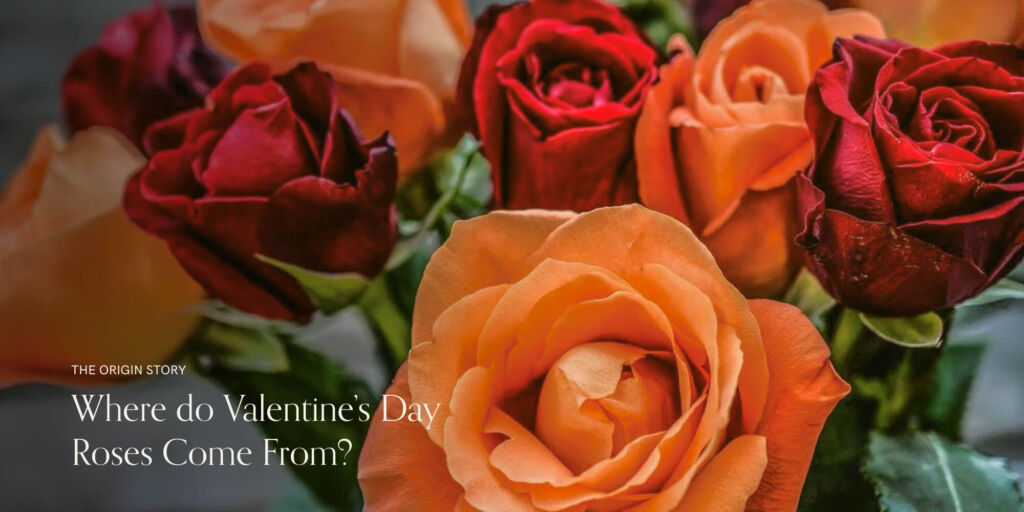
Valentine’s Day, an annual occasion where lovebirds declare their affection for one another, and a day where roses and flower gifting is witnessed all over the streets.
Officially known as Saint Valentine’s Day, it is celebrated on February 14th each year. There are many variations to the origin story, and a couple of martyrs named Valentine. And so we sieved through the many layers to bring you a brief history of the day, and why roses became the de facto flower associated with it.
Who was Saint Valentine?
As is often the case with long-standing traditions, there are plenty of myths surrounding the origins of Valentine’s Day. And as you would expect, there are some rather fanciful legends put about to explain how we came to set aside February 14th as a day for celebrating romance.
To understand the real origins of Valentine’s Day, we need to remember that the full name of this romantic celebration is actually “the Feast of St Valentine”.
Valentine, or Valentinus, as he had been known back then, was a Christian saint. In fact, there seem to have been two of them, but with time, the stories about the two saints of the same name have evolved and possibly amalgamated into one.
Written accounts suggest that the figure we commemorate was a clergyman in 3rd-century Rome. He was said to have helped Christians who were being persecuted by the Romans and, according to some accounts, he even performed Christian wedding ceremonies for soldiers, who were at that time forbidden to marry. He became a martyr in 296 AD on that special date that is February 14th.
According to a highly romanticised tale, he restored the sight of his captor’s daughter, writing her a letter signed “from your Valentine” before he was executed.
How did Valentine’s Day come to be associated with romance?
One 18th century theory goes that Valentine’s Day rose to prominence as an attempt to replace the Roman fertility festival known as Lupercalia, but this theory has since been debunked and dismissed by academics. The February 14th date only became associated with romance in the High Middle Ages, courtesy of a Geoffrey Chaucer, at a time when courtly love was de rigeur.
Chaucer’s mention of Valentine’s Day, in his writing Parlement of Foules, fitted the belief at the time that mid-February was when the birds paired up:
“For this was on seynt Valantynys day
Whan euery byrd comyth there to chese his make.”
In modern English, this means, “For this was on St Valentine’s Day, when every bird comes there to choose his mate.” The mention here suggests an established tradition, but in fact this is the first reference to it as such, and it’s thought that the association with romantic love was something Chaucer simply made up. And this supposed fantasy lives on in a celebrated fashion through times up till today.
Oh, the power of words.
A rose by any other name…
And then we get to the romantic line that also lives till today. William Shakespeare wrote in the love tragedy Romeo and Juliet the popular adage, “What’s in a name? That which we call a rose by any other name would smell as sweet.”
Roses, sweet smelling, and always a classic representation of passion and romantic love.
We all know roses – especially red ones – are the quintessential Valentine’s Day flowers, much like poinsettias represent the Christmas season. But why roses?
Florists aren’t complaining, as roses are very hardy and feature a long-lasting bloom. Besides any other flower, roses have historical relevance. It’s amazing how flowers, and roses especially, have resonated with all kinds of people throughout the centuries.
Roses are said to have become linked to Valentine’s Day during the 17th century, with tales of the rose being a symbol of Venus, the classical goddess of love.
Floriography, the language of flowers, exploded in the Victorian era, making a gift of Valentine’s Day roses a form of communication. In floriography, each rose colour represents the giver’s feelings towards the recipient.
Roses and their meanings by colour
Thanks to the conservative, emotionally-reserved nature of Victorian society, one would avoid speaking words of feelings aloud, so they let the flower bouquets do the talking. That’s when floriography grew tremendously popular.
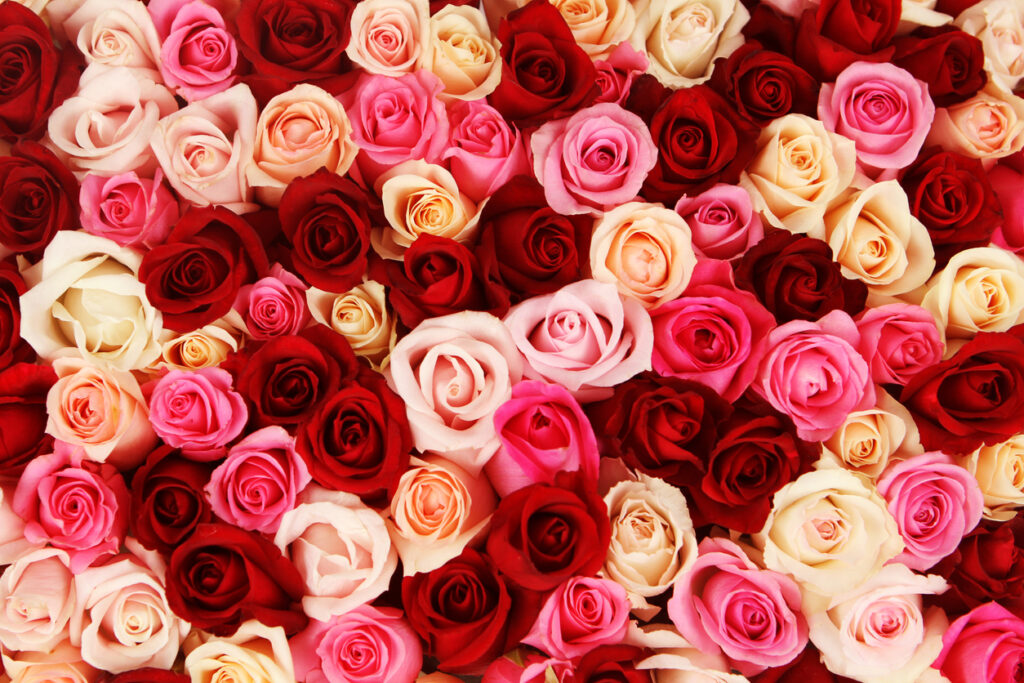
Below are some meanings of common rose colours
- Red rose: Romantic love and desire (can be expressed with just a single red rose)
- White rose: Innocence and charm
- A mix of red and white roses: Unity
- Light pink rose: Grace and elegance
- Dark pink rose: Thankfulness and appreciation
- Medium pink rose: Happiness and bliss
- Lavender rose: Enchantment, love at first sight
- Burgundy rose: Beauty
- Coral rose: Desire
- Orange rose: Fascination
- Peach rose: Modesty, and immortality
- Yellow rose: Friendship, joy and gladness
So while red roses are the most popular during Valentine’s Day, you may also choose to express your affection and love to the special one in your life with another colour of rose, one which speaks your mind to him or her.
And if you’d like a rainbow mix of roses, that’s possible too. Simply put together the different coloured roses from a florist near me. Just so you know, in floriography, that means “You’re everything to me.” How about that?
Get your roses at Flower Nation
This Valentine’s Day, get your roses prepped up in gorgeous hand bouquets, all ready to present to your dearest valentine. Look to your one-stop online florist Malaysia for all your flower gifting needs.
Not only does Flower Nation carry an extensive and comprehensive range of roses and other floral choices, you can trust the team of Selangor florist with years of experience to create gorgeous arrangements perfect for gifting.
The florist in Klang Valley also provides one of the best flower delivery Malaysia. Same-day delivery is available around Klang Valley for orders within the vicinity.
Shop at Flower Nation for your Valentine’s day flowers now!